
Seb
Puzzles & camera
Seb builds the mechanics, camera, game flow and underlying code.
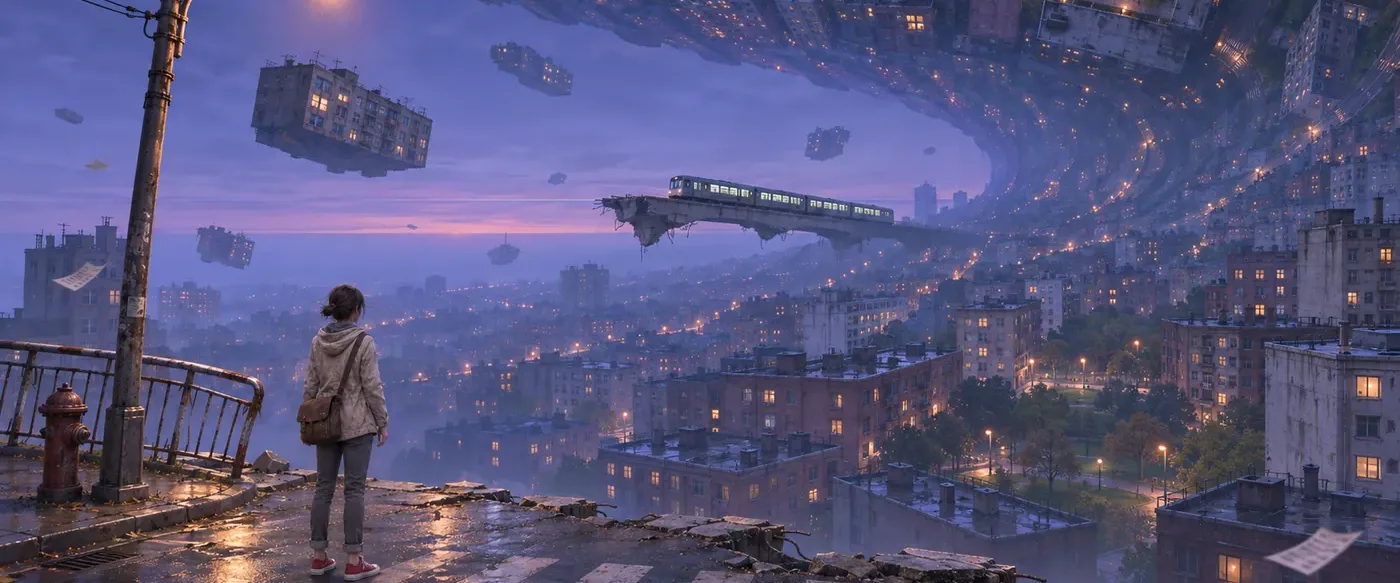
False Depth is a calm, dreamy third-person puzzle game where you walk through an ordinary city and find flats hanging in the sky. Facades peel away like wallpaper, and streets bend up into walls.
What you see decides what's real.
We're building it for the Epic AI MegaJam, November 12 to 15, in Unreal Engine 5.8. Seb handles gameplay, including puzzles and camera, while Nat does the art, world and light. I'm Laurent, and I handle character, animation and presentation. We each run a handful of AI agents. This is the first of our jam devlogs, starting with the game and how we arrived here.
During the jam the game was briefly called Wake Up, and this post first went out under that name. It's False Depth again.
Seb builds the mechanics, camera, game flow and underlying code.

I make her model and animation, plus screens, sound and music.

Nat makes target frames, the city kit, materials, lighting and dressing.
Our first 26 seconds
This rough cut from day 0, the jam's first day, brings together the concept and four mechanics, along with our character's first steps on her own rig.
All four mechanics involve moving your body and handling the city around you, without casting spells.
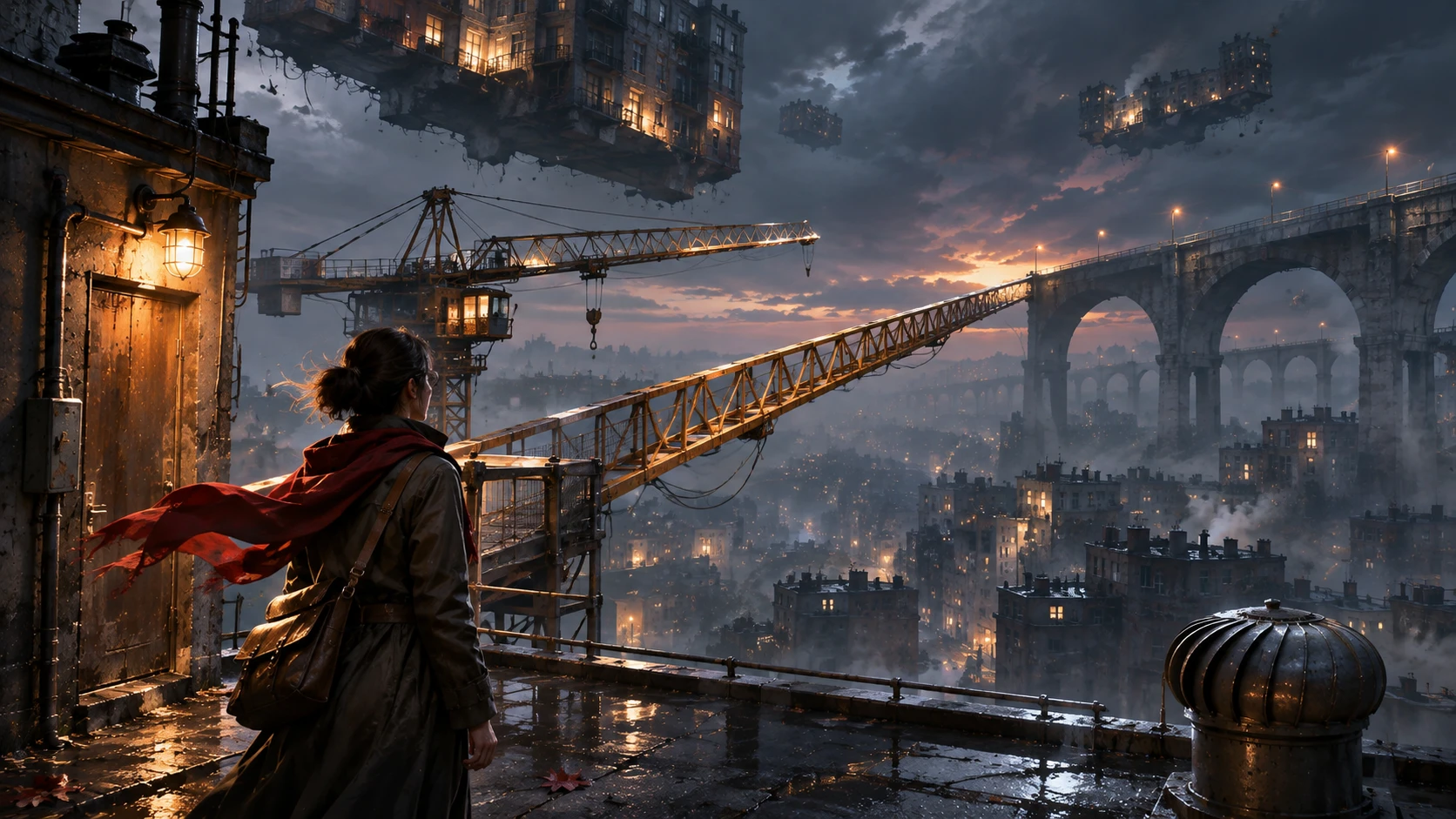
With Align, you step sideways until two broken pieces line up by eye and join into a bridge.
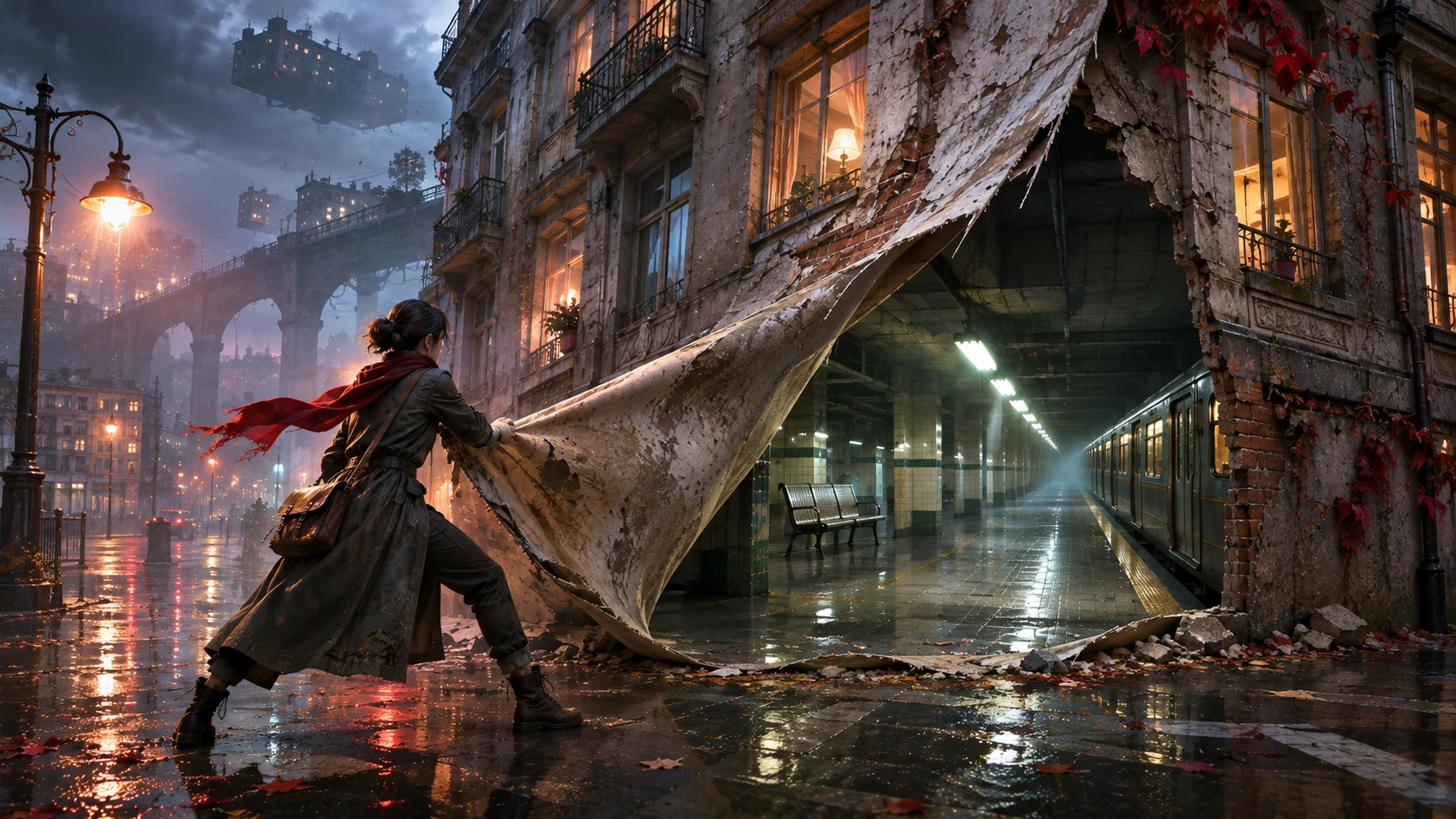
Peel lets you pull a facade's loose corner and uncover another place, sometimes bigger than the space holding it.
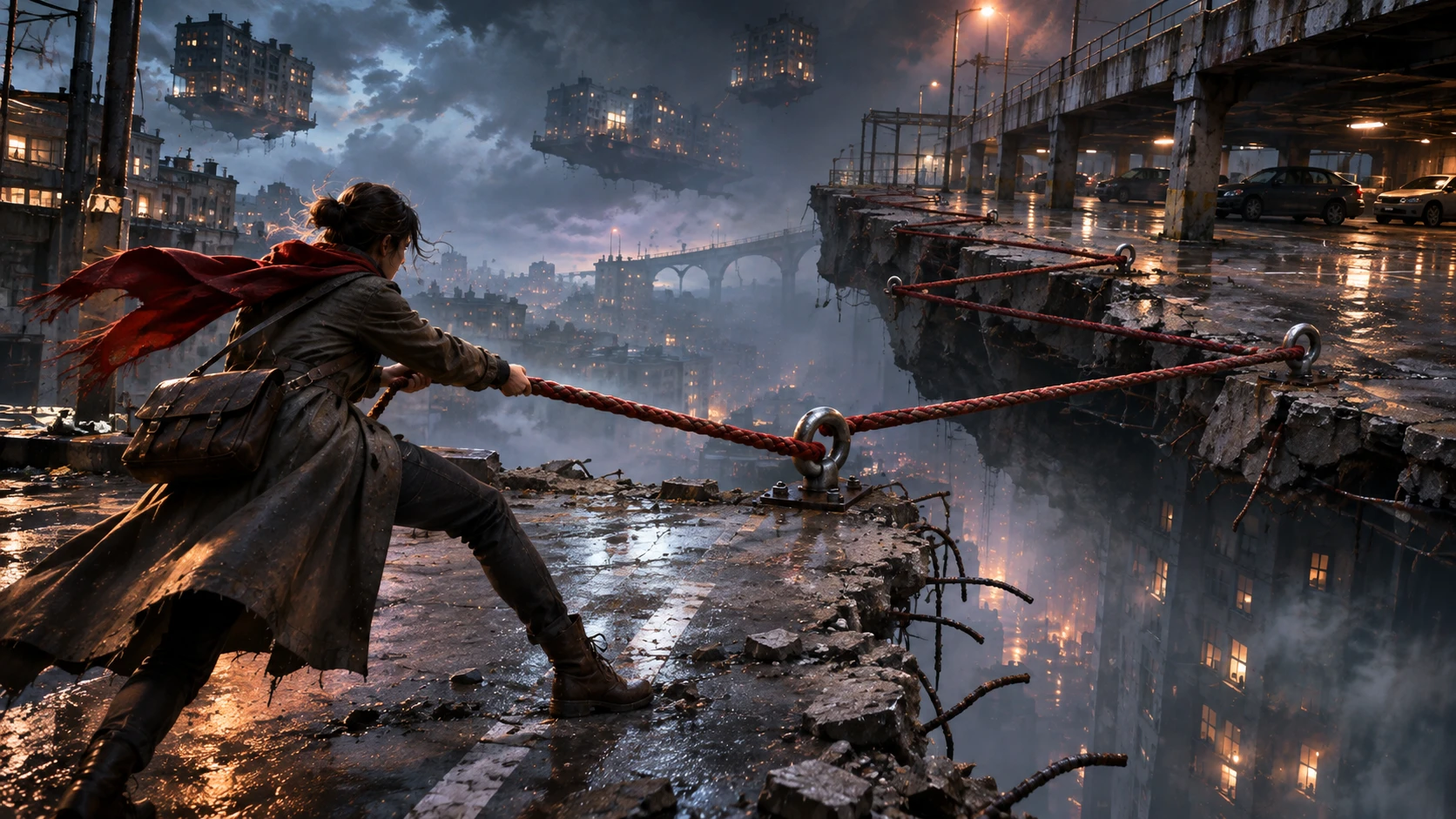
To Stitch a gap, you lace two street slabs together like a shoe, then haul the rope tight and cross.
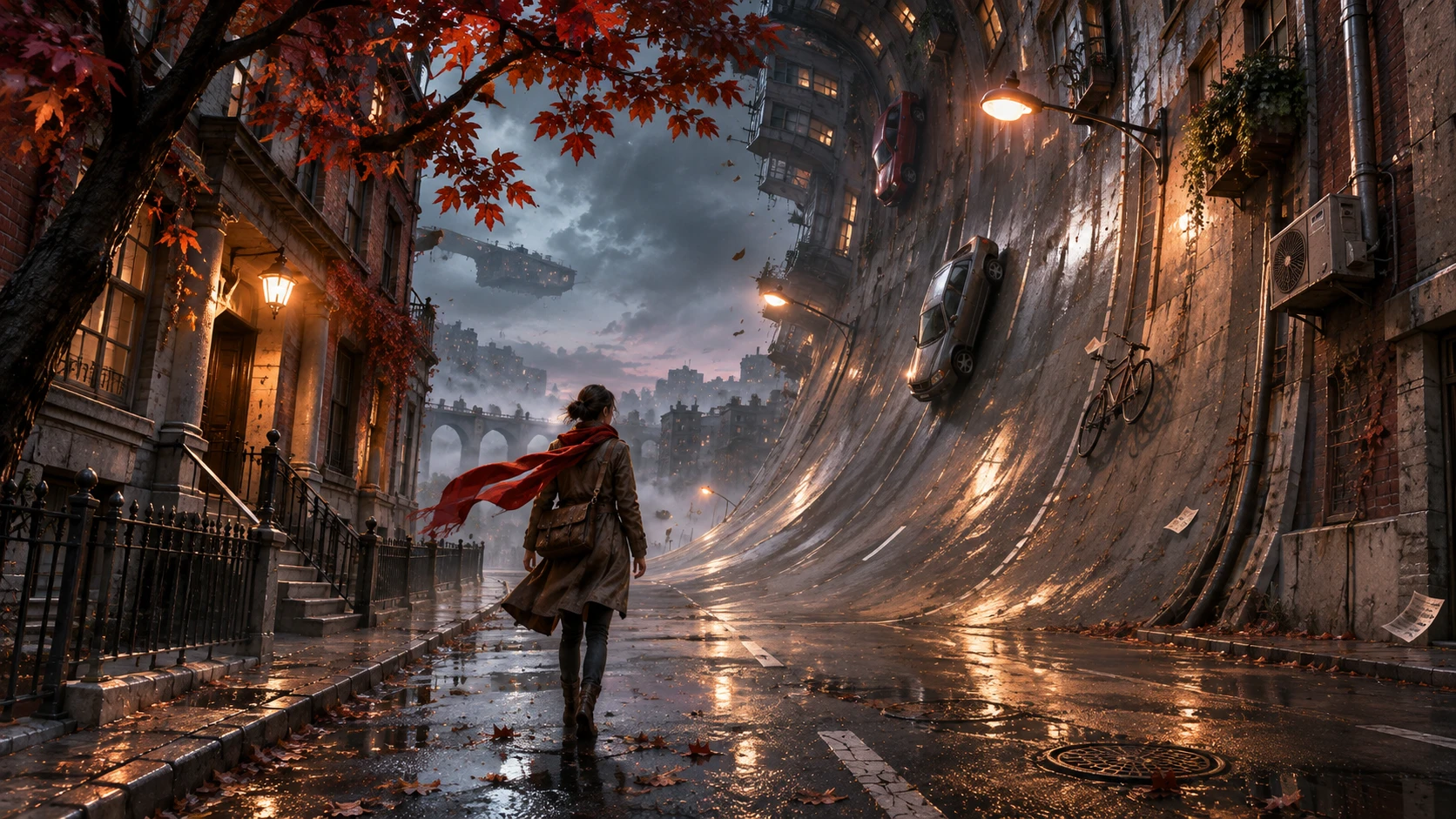
When you Fold a street into a wall, gravity follows the bend and carries you along.
The four mechanics in our new art style. Generated concept art.
Before we wrote any code, we drew each rule in three panels and turned those drawings into loops.
There's no combat in False Depth. We checked what the brief meant by Hollow Knight, and fighting wasn't part of it. Inside and Journey gave us a starting point for the quiet mood, while Superliminal helped us think about spatial tricks.
We explored four looks for the city: overcast, golden haze, graphic painterly and blue hour. Blue hour won that first round, with wet streets, warm windows and a violet sky, and our first concept board was painted in it.
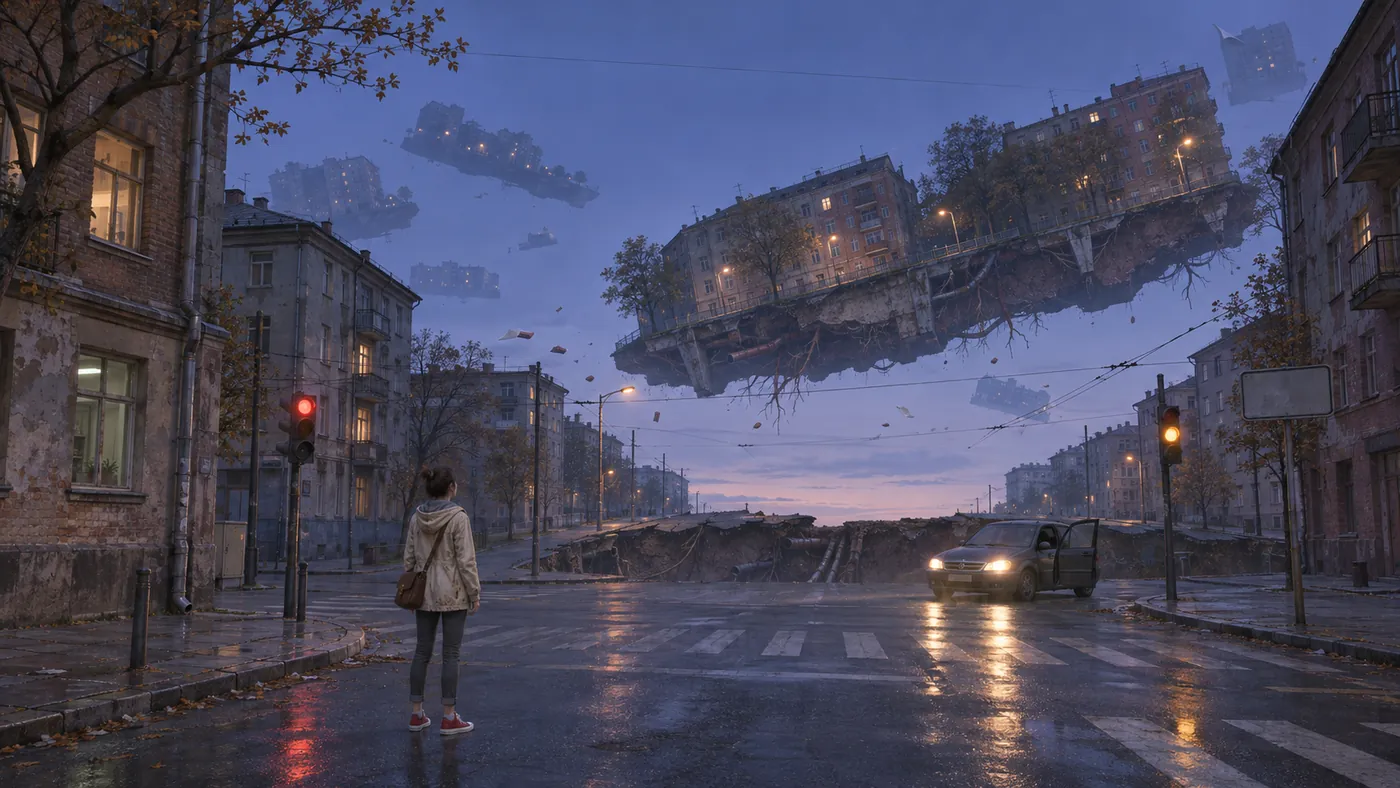
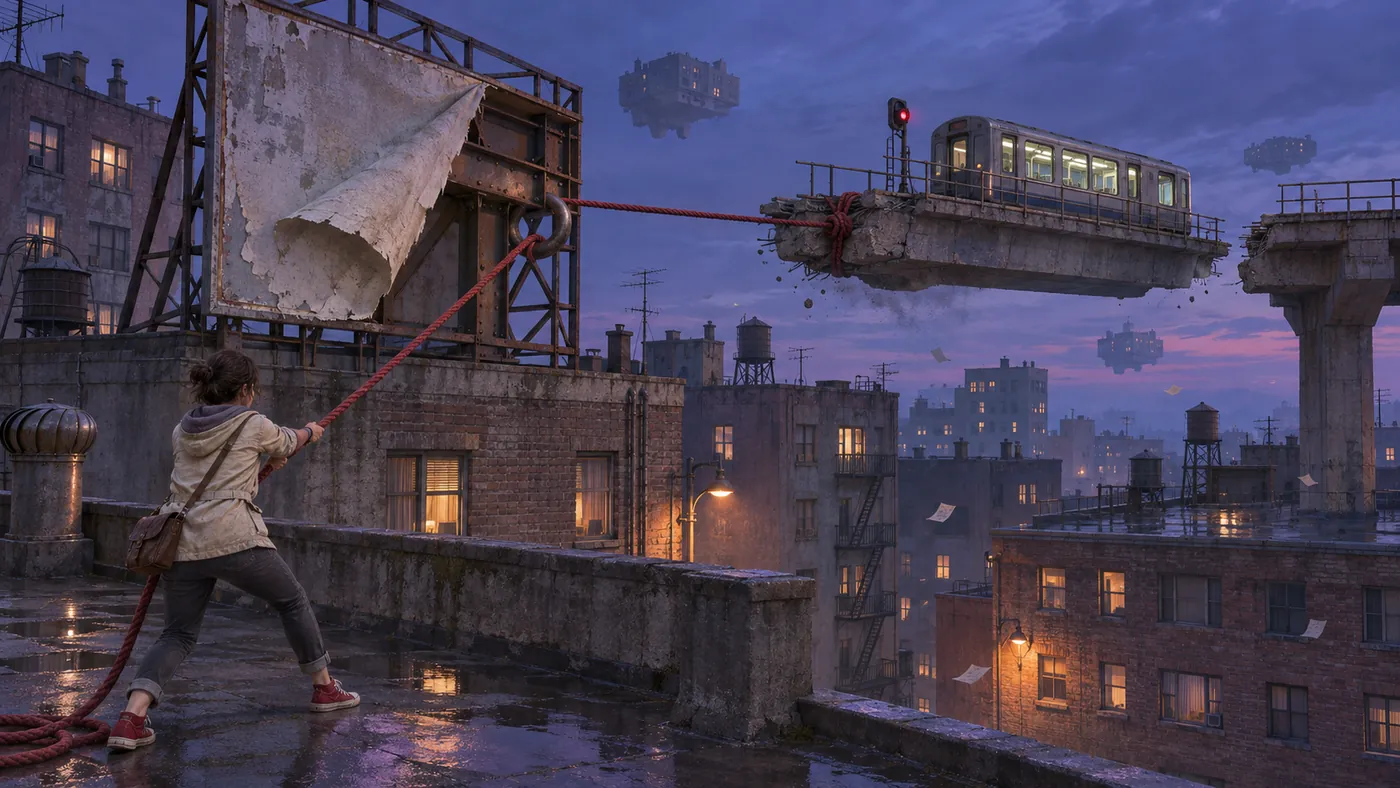
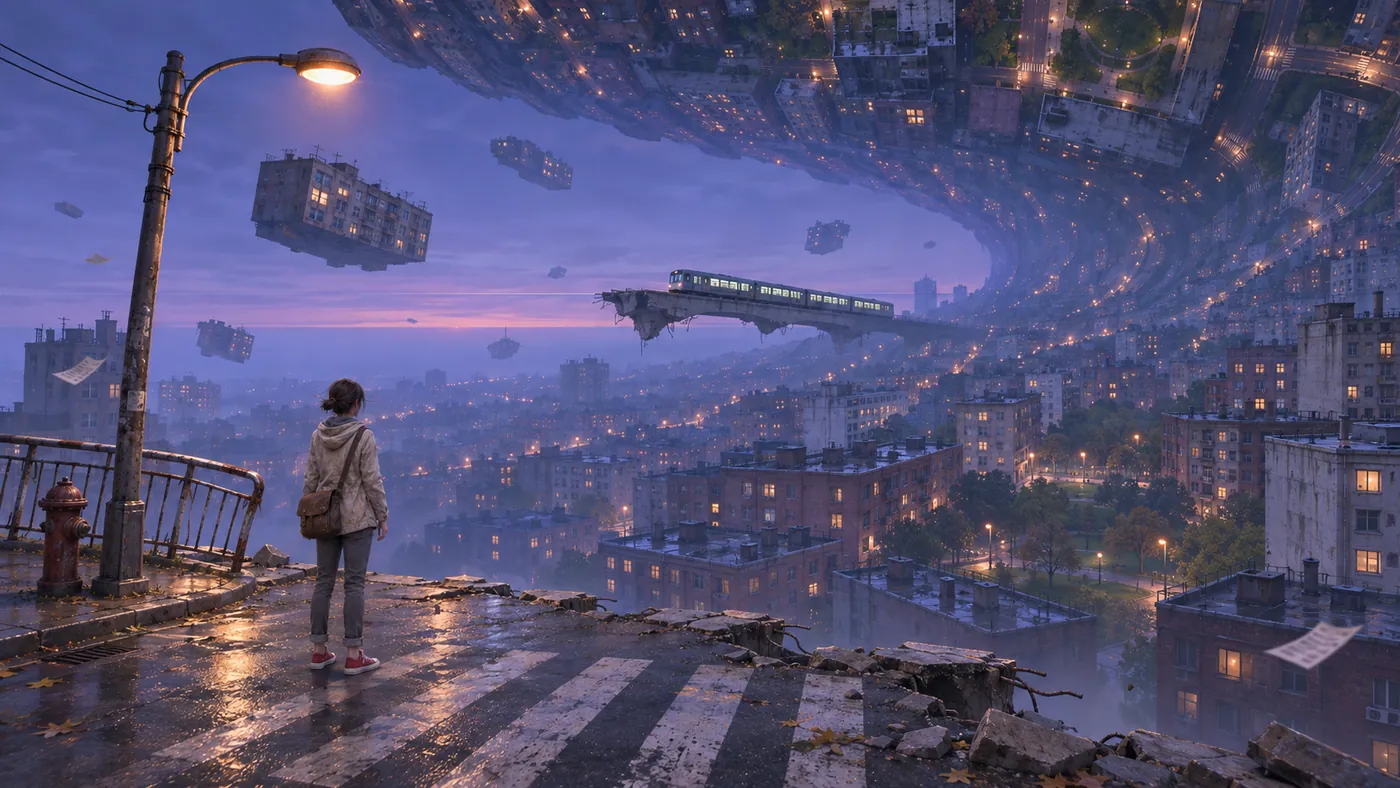
Our first concept board, in blue hour. Generated concept art.
The style we're going with keeps the dusk but lets a storm roll in. Low clouds sit on the rooftops, the streets are soaked and mirror every orange lamp, and the frames read more like paintings than renders. Almost everything is grey and blue, so the reds carry the frame: her scarf, the autumn leaves, the odd lamp. Your eye goes straight to them. The impossible parts, like a peeled sky or a street curling into a wall, feel heavier and stranger in that light.
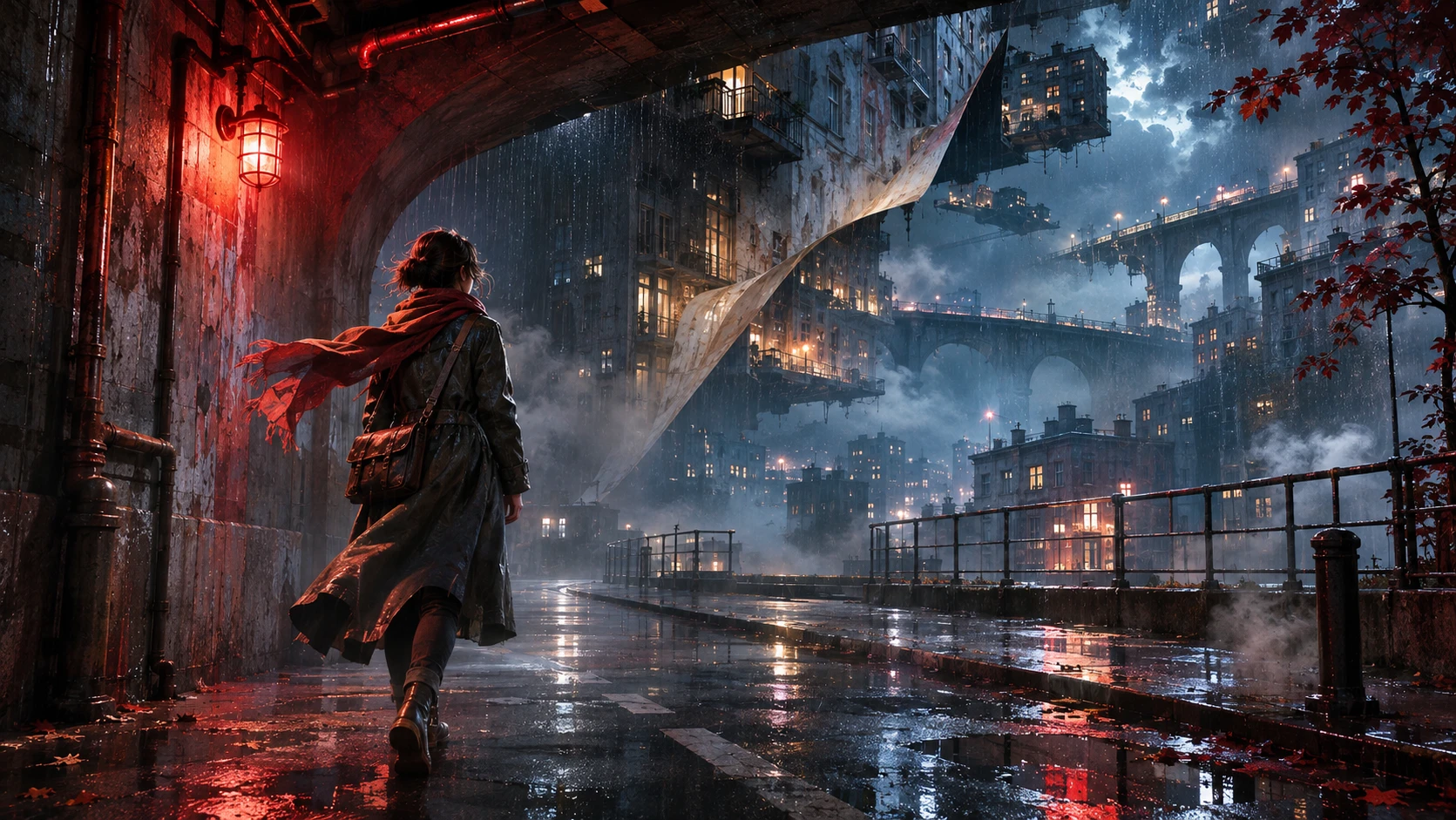
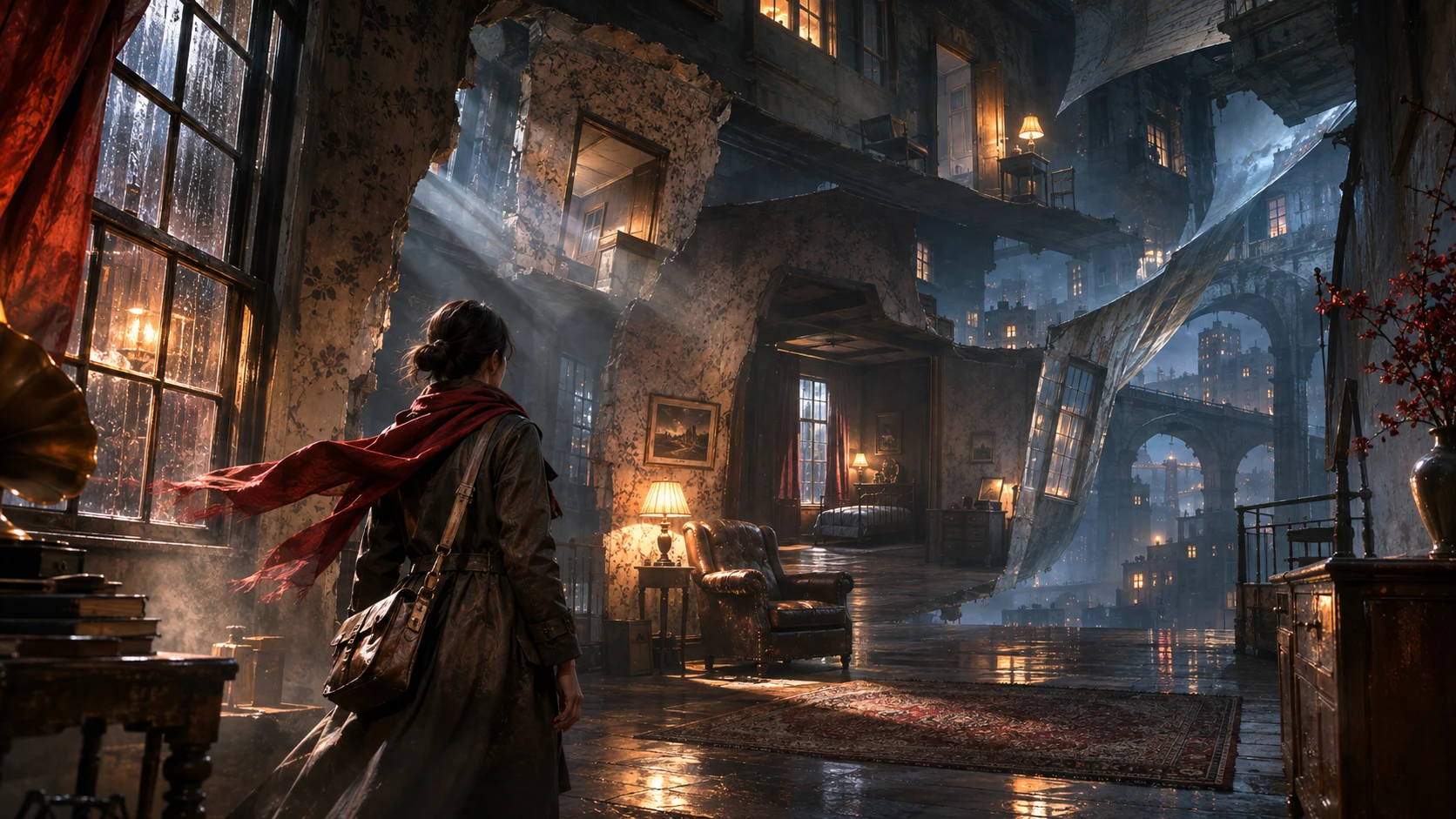
The art style we're going with. Generated concept art.
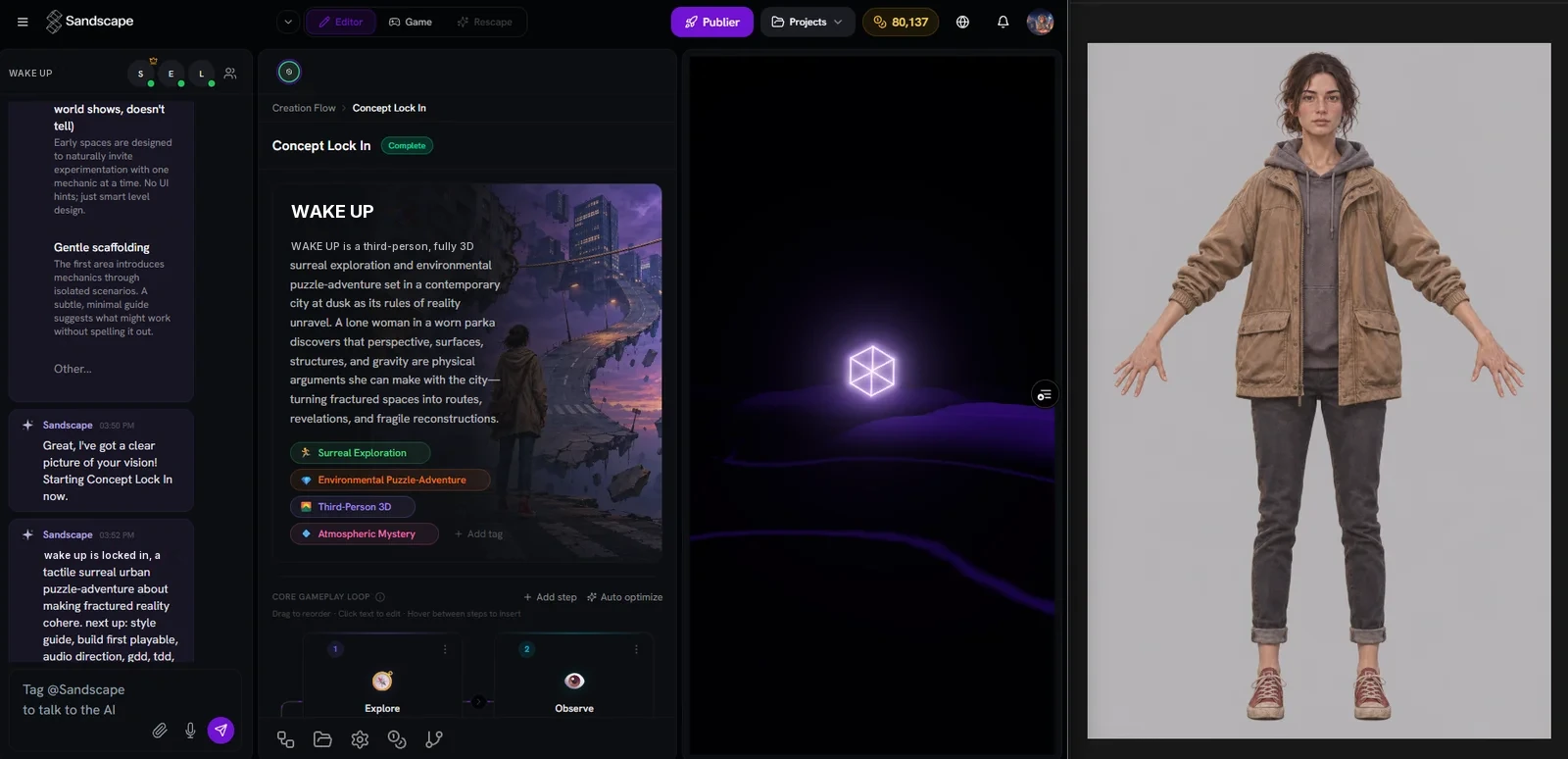
We worked through Concept Lock In in Sandscape, then the core loop: explore, observe, experiment, reshape, traverse, discover. That led to a full design document and a first playable spec for Home Streets at blue hour. We're keeping the scope there so we can make everything from the first logo to quitting feel finished.
For the mechanics, our rule is author the result, simulate the feeling. We build the finished shape of each join, peeled sheet and rope pull by hand, then use code to give it weight, resistance and sound as you move it into place.
The character went from a concept sheet to a rigged model in a day, and today she ran her first laps through a grey Unreal test level. I'll go through that process in devlog 2.
An ordinary city starts coming apart.
You're hereHer new look, the mocap and the MetaHuman rebuild.
Read it 3How three of us and many agents stayed pointed the same way.
Read it 4Sight, Rip, Rope and Bend, from grey gyms to the street.
Read it 5The jam's theme, shelved ideas and a song.
Read it