Sight
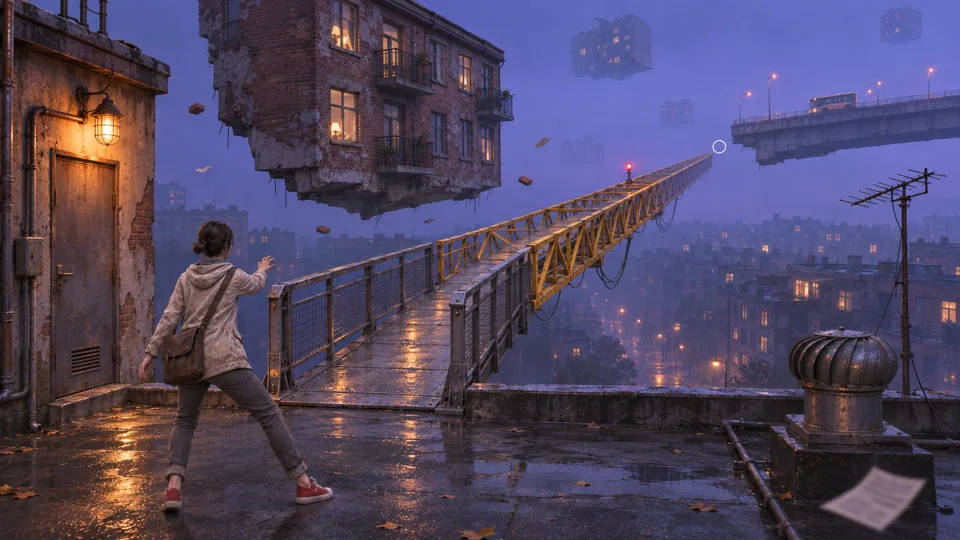
Find a spot where the broken ends of two distant pieces meet by eye. Hold steady and they join into one solid piece. You can walk around it afterwards; the join holds from every angle.
 The picture we started from
We're getting False Depth's four mechanics working in Unreal during the Epic AI MegaJam. This fourth post covers the grey test gyms, the agents that run their own scenarios, and the changes we made after playing. We also added prompts to help new players learn the controls.
Our design document asked players to line up broken pieces by eye, tear a surface off the world, haul things with a rope, and walk along a street that curves into a wall. We liked them on paper. Finding out whether any of that felt good meant building something we could play, with a couple of days to do it.
We pinned down what each mechanic had to do and gave it to its own agent. The first job was a bare grey gym, built around reach, gap width or curve tightness, with a clear question to answer. Each agent also built a test scenario it could run repeatedly without us playing every time. For Sight, that meant checking that joining pieces changed nothing on screen except a little falling dust. Scripts build the gyms from data, so changing a measurement and rebuilding takes minutes.
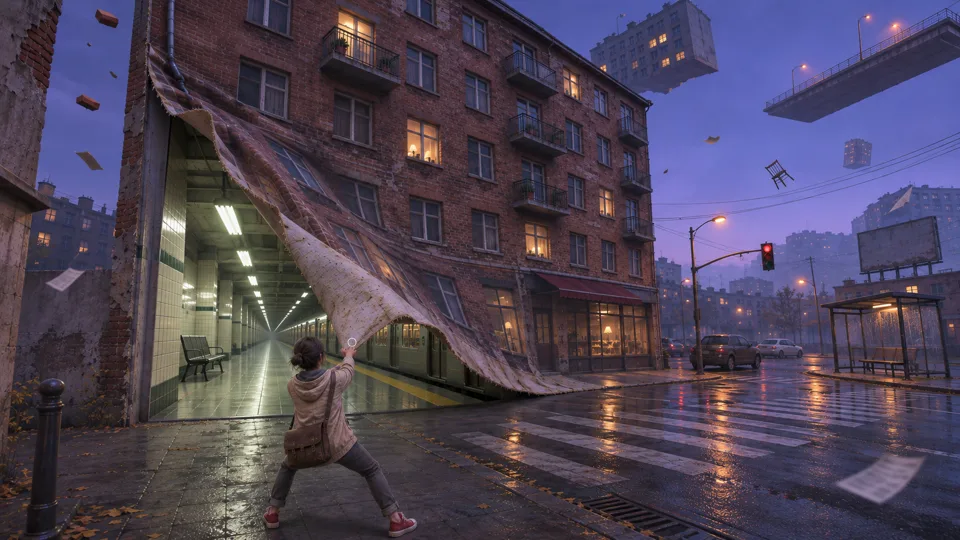
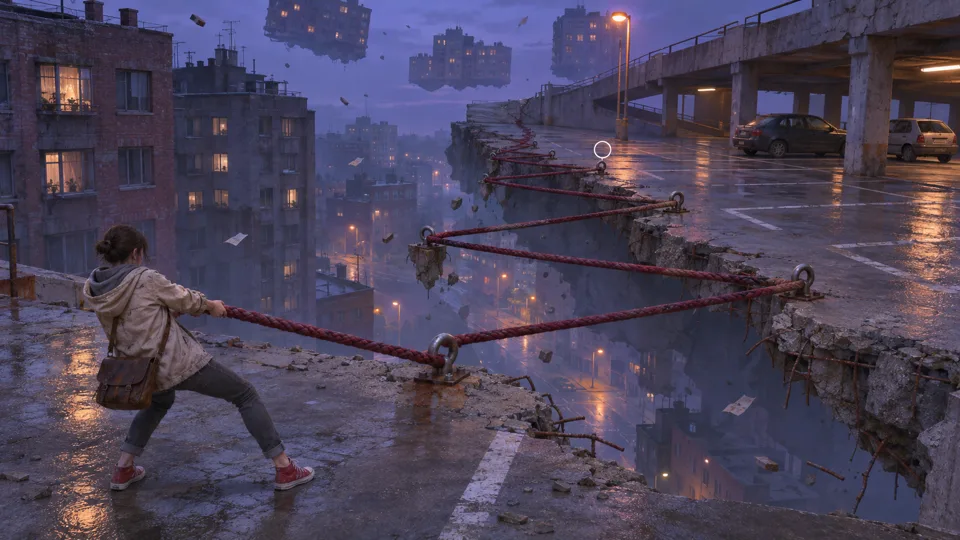
Before building each mechanic, we generated an image of it in its space to give the agent a layout to aim for. Then we played what it built and told it what felt wrong. The first rope gym tied a line between fixed points, with her hands off it. Playing it was useless. We put the rope's end in her hand and made her haul with her weight. Rip went from opening between rooms to tearing a facade away with a forest behind it.
Find a spot where the broken ends of two distant pieces meet by eye. Hold steady and they join into one solid piece. You can walk around it afterwards; the join holds from every angle.
The picture we started fromSome surfaces are only pictures. Grab a loose corner and pull it away like a heavy sheet. Behind it is somewhere else, with its own light and air. A building's facade can hide a forest.
The picture we started fromThrow your red rope onto a hook and haul with your whole weight. Run it through a ring to use it as a pulley, bringing a floating slab of road home so you can cross.
 The picture we started from
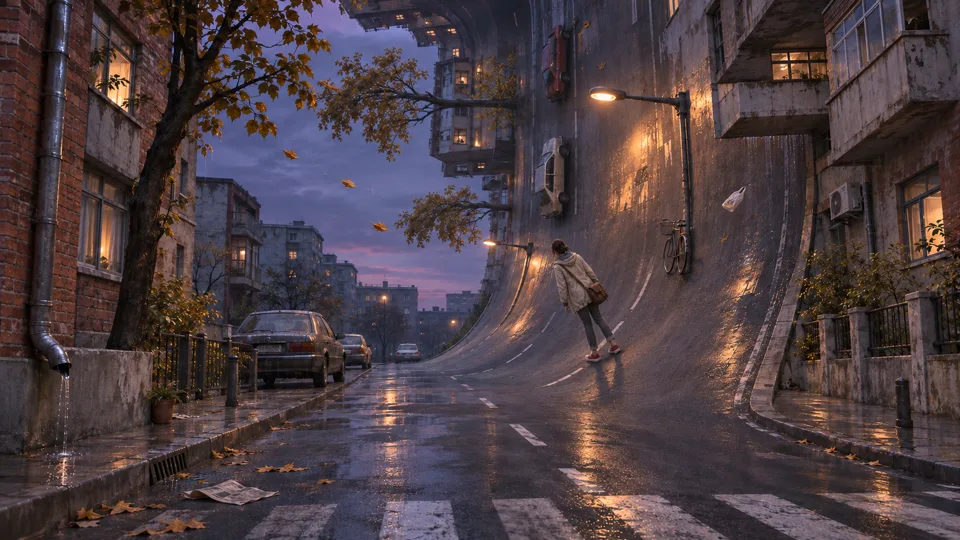
The street curves up into a wall. Keep walking and down follows the ground under your feet, while the horizon turns around you. From inside the bend, the curve can be hard to see.
 The picture we started from
Lining up pieces still feels convoluted. Sight is the weakest mechanic, even after we removed the separate presses for each piece so everything you line up sets together. We have about a day left, and we're working on it.
Playing made it clear that new players would need help, so we added tutorial prompts early in the level. We generated references over real game captures, including "Rip it off" and "Line them up", and gave them to an agent. It built the icons and prompts quickly. They appear the first time only, and their button icons follow whether you're using a mouse or gamepad.
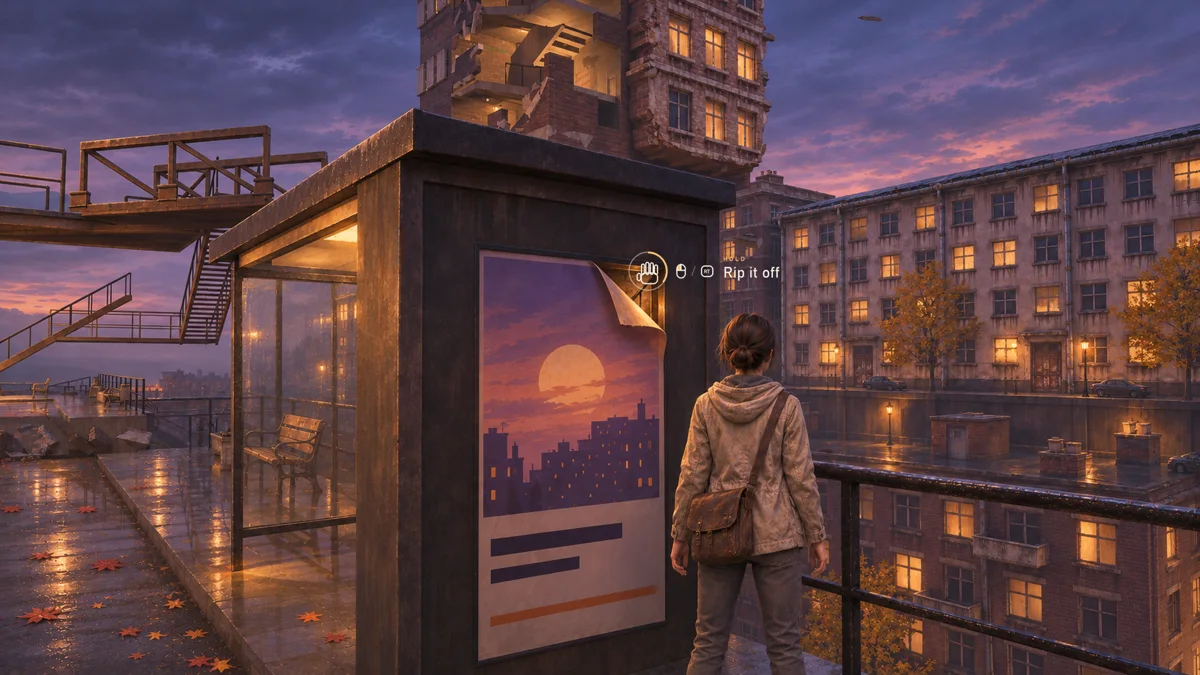 Reference
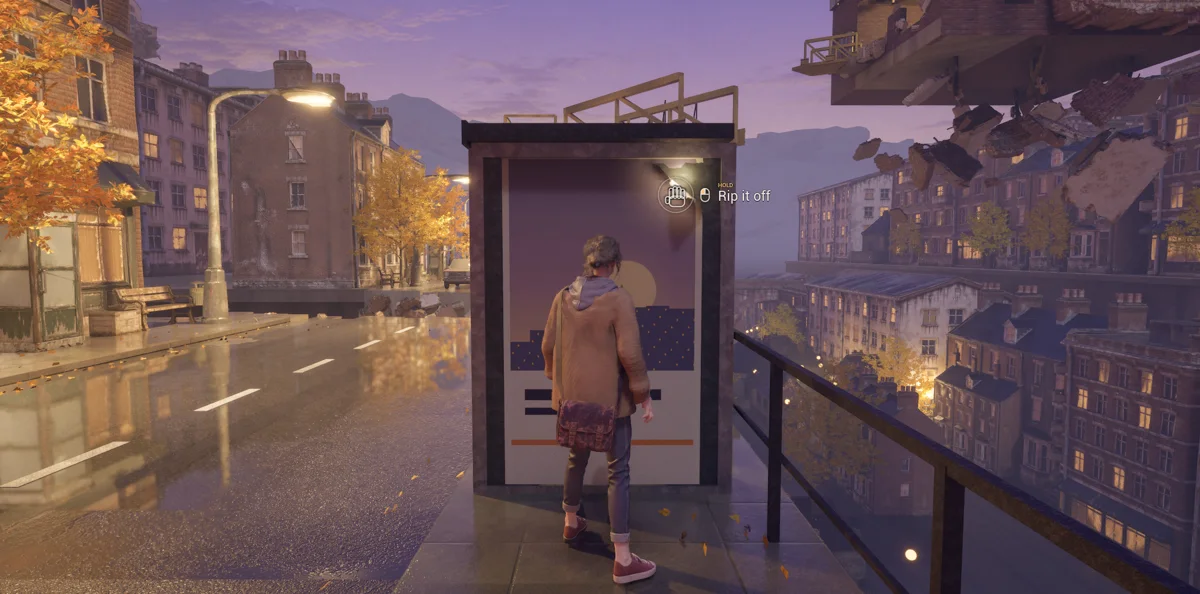 In game
A generated prompt reference beside the result in game.
Once the mechanics were ready, we brought them into level design. The next post covers putting them together into one playable street.
An ordinary city starts coming apart.
Read it 2Her new look, the mocap and the MetaHuman rebuild.
Read it 3How three of us and many agents stayed pointed the same way.
Read itSight, Rip, Rope and Bend, from grey gyms to the street.
You're hereThe jam's theme, shelved ideas and a song.
Read it